






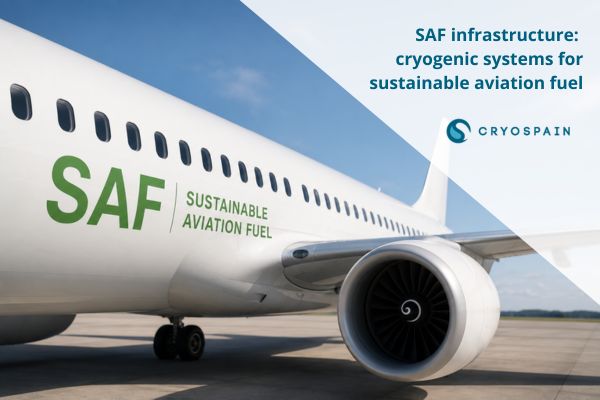
While initial conversations around Sustainable Aviation Fuel (SAF) revolved around new fuel development formulations, the question on how to adopt them in practice has shifted the narrative. Today, the focus is increasingly on how to build the right infrastructure needed to produce, store, condition, and deliver these fuels at scale.
The International Air Transport Association has made it clear: Sustainable Aviation Fuel solutions available today hold the potential of contributing around 65% of the reduction in emissions needed to reach net zero by 2050. However, the same institution also warns about the challenges ahead not being a matter of feedstock availability: “There is enough SAF feedstock available for airlines; however, “significant barriers remain, including slow technology rollout.”
Aviation decarbonisation depends on more than transforming aircraft and engines or formulating the right sustainable fuels. In addition, sustainable aviation fuel infrastructure, a reliable SAF supply chain, and effective airport readiness are all key for fuel availability and therefore for effectively enabling the decarbonization of the aviation sector.
This shift is illustrated by ReFuelEU, a legal initiative by the European Union that includes aviation fuel suppliers, EU airports, and airlines as part of the shared efforts towards decarbonization.
Consequently, as the conversation shifts towards developing the right aviation fuel infrastructure, cryogenic systems are becoming increasingly relevant in SAF-related value chains, especially where liquefied gases such as CO₂, hydrogen, or LNG must be stored, conditioned, transferred, or vaporized.
What follows is a look at some of the structural challenges that need to be faced in order to fully develop the Sustainable Aviation Fuel potential, and the role of cryogenic infrastructure for SAF in enabling it.
The role of SAF supply chain and infrastructure: decarbonization in the aviation sector is becoming an infrastructure challenge
SAF availability and adoption depends on a number of variables that go beyond fuel production capacities. In fact, ultimately, the infrastructure required to store, transport, certify, blend, and distribute the fuel safely will greatly determine whether the fuels can effectively be used.
However, optimizing infrastructure and the SAF supply chain involves a number of challenges, one of them being the diversity of fuel types that the term SAF comprises. Because each type of Sustainable Aviation Fuel presents its own needs, which also greatly determine their different expected adoption timelines.
On paper, success depends on being able to match the right sustainable aviation fuel infrastructure to each formulation’s pathway and requirements. In practice, the diverse requirements complicate the picture, making structural planning a must for the industry at large. A process that necessarily involves the coordination of a large and diverse number of interested parties, from aircraft manufacturers such as Airbus and Boeing, to airlines, fuel suppliers such as Shell or BP, airports, certification bodies and European Union Aviation Safety Agency, as well as regulators.
SAF biofuels, RFNBO-derived e-fuels and liquid hydrogen: different aviation decarbonization pathways, different infrastructure requirements
RFNBO-derived e-fuels, SAF biofuels, and liquid hydrogen represent three important pathways for aviation decarbonization, each with distinct infrastructure requirements and different expected adoption timelines:
SAF biofuels
SAF biofuels, or bio-based SAF, are fuels produced from organic waste, biomass and other renewable biological sources. The International Air Transport Association identifies 11 certified SAF production pathways that are compatible with today’s aircraft when blended according to approved limits.
Drop-in SAF biofuels represent the near-term solution for aviation decarbonization, as they are generally designed to be compatible with existing aviation fuel infrastructure (especially when blended with conventional jet fuel).
Still, a few challenges emerge in the form of upstream production and supply chain capacity. More specifically, specific solutions are still being developed in terms of blending, certification, storage segregation, traceability, and supply chain logistics so that full-scale adoption can take place.
RFNBO and e-SAF: more complex upstream production infrastructure
RFNBOs and e-SAF alternatives are 100% synthetic fuels whose production relies on complex chemical processes involving renewable hydrogen and captured carbon.
More specifically, the two most relevant pathways for obtaining RFNBOs are the RWGS + Fischer–Tropsch pathway and the methanol-based routes toward jet fuel.
These distinct production pathways mean RFNBOs require their own sustainable aviation fuel infrastructure, as they cannot rely on the same one as bio-based SAF.
Compared to SAF biofuels, the infrastructure transformation required for RFNBOs is more complex, with full-scale adoption depending on the successful integration of a number of processes:
- The production and supply of renewable hydrogen, which requires specific transportation and low temperature storage systems, including thermal insulation systems and boil-off gas management, among other solutions.
- CO₂ capture technologies and the storage and transportation systems for it, which require their own dedicated tanks and cryogenic equipment.
- Achieving process integration.
- Developing conditioning systems and synthesis units.
- Incorporating downstream fuel upgrading and delivery.
- Integrating reliable handling and aviation fuel storage solutions.
Even if these issues paint a more complex picture in terms of upstream production infrastructure, RFNBO-derived e-SAF still benefits from a drop-in advantage at the point of use. This makes RFNBOs represent a promising alternative as Sustainable Aviation Fuel in the mid-term.
To achieve this, cryogenic engineering emerges as a necessary ally. It supports feedstock handling and upstream production infrastructure while ensuring thermal efficiency and system reliability across the SAF supply chain.
Liquid hydrogen (LH2) as a separate long-term aviation fuel pathway
The adoption of liquid hydrogen represents the final frontier for the energy transition in aviation: it would present a solution to the emissions problem, but its implementation is viewed as a long-term strategy as it requires transforming airport fuel architecture altogether, including airport storage, distribution, fueling, safety zones, and operational procedures.
Because liquid hydrogen must be supplied and stored in its own dedicated infrastructure, its adoption as fuel for aviation requires the following developments:
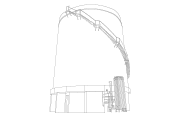
- Cryogenic storage at extremely low temperatures, with dedicated vacuum insulated tanks and complementary low temperature storage systems.
- Vacuum-insulated transfer lines specifically designed for liquefied gases handling.
- Boil-off gas management systems.
- Specialized fueling systems.
- Strict safety controls, with new and adapted ventilation strategies, emergency procedures, safety zones and staff training.
The role of cryogenic infrastructure in SAF-related and RFNBO value chains
Cryogenic engineering plays a central role in the supply chain and production of SAF and RFNBOs, as it ensures continuous thermal control in order to prevent product loss and ensure safe processing. For instance, cryogenic solutions are proving central in solving the upstream challenges in RFNBO production. Because of this, cryogenic infrastructure for SAF is emerging as key for the adoption of Sustainable Aviation Fuel.
How cryogenic engineering ensures low-temperature storage, stability and safety
Cryogenic engineering involves ad-hoc engineering and equipment for low-temperature gases and liquids during different operations, including storage, transferring, and conditioning.
When well designed, industrial cryogenic systems facilitate these processes while reducing inefficiencies that become costly at scale, as they:
- Maintain stable process conditions and guarantee product stability.
- Reduce product losses due to ambient heat absorption, thus optimizing efficiency.
- Improve operational safety.
- Support continuous operation in industrial fuel production environments.
In order to achieve these goals, industrial cryogenic systems require careful design. Engineering priorities include thermal insulation, boil-off gas management and evaporation control, pressure management, and the safe transfer of liquefied gases through reliable valves, piping, and instrumentation.
On top of this, strict safety standards must necessarily be included as part of well-designed cryogenic system architecture. In the case of advanced aviation fuel infrastructure, cryogenic notions must be integrated with the industry’s specific requirements.
The cryogenic equipment that drives synthetic fuel production
The following cryogenic systems provide support in solving the key upstream production infrastructure issues for synthetic SAF production systems:
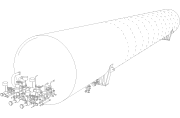
- CO₂ storage tanks, including vacuum insulated tanks for temperature control and loss reductions.
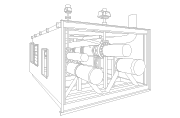
- CO₂ vaporizers for process conditioning and controlled delivery, which allow controlled conversion from liquid CO₂ to gaseous CO₂ at the required flow rate, temperature, and pressure for downstream use.
- Hydrogen handling systems with adequate thermal insulation systems.
- Insulated piping that guarantees temperature control and loss reductions.
- Pressure control equipment.
Cryogenic engineering as an enabler of full-scale adoption of Sustainable Aviation Fuels
Larger RFNBO production plants, improved CO₂ storage and vaporization systems, renewable hydrogen integration, advanced thermal insulation, and automated pressure control are just some of the key trends expected in the not-so-distant future for the sustainable aviation sector.
Across these, technological and cryogenic engineering advancements are expected to be central for the energy transition in aviation, moving on from being supporting equipment to become crucial strategic infrastructure.
In this context, finding the right cryogenic engineering partner will prove essential. That’s where Cryospain comes in.
Cryospain projects and cryogenic capabilities for sustainable aviation fuel infrastructure
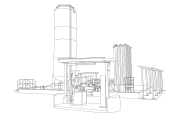
Cryospain delivers integrated cryogenic storage, vaporization andtransfer systems for SAF-related production, RFNBO-derived e-fuels, liquid hydrogen applications and other low-carbon aviation fuel value chains
We put to work our extensive cryogenic expertise to deliver cryogenic systems capable of ensuring operational stability and efficiency for SAF infrastructure. Some of our recent projects demonstrate this capacity, including our project involving four liquid hydrogen tanker loading systems, and our cryogenic tank project for Neom Green Hydrogen.
Our scope of supply is designed to meet the highest cryogenic engineering standards for product stability, efficiency, and safety:
- Equipment for bulk CO₂ storage capable of pressure control, phase management, and conditioning.
- Dedicated vacuum insulated tanks for liquid hydrogen.
- Vaporizers.
- Transfer systems.
- Other complementary handling systems and pressure control equipment.
Ready to scale up your sustainable aviation fuel capacities and join the energy transition in aviation?
At Cryospain, we are here to help.
Get in touch with us and discover how.