





LNG Train Project: Cryospain selected to take part in pioneering European initiatives
Cryospain is proud of our mission to tackle polluting fuels in transport. A good example of this is our participation in Europe-wide projects to promote the switch to LNG, in trains among other vehicles. Natural gas has all the right ingredients to replace traditional...
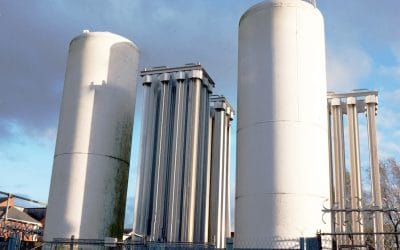
Why are liquid oxygen tanks so important? Uses and other important information
Oxygen presents numerous uses across different sectors, a wide variety of functionalities that also mean there’s a pressing need for many industries to store this element. Liquid oxygen tanks have become one of the most efficient methods to do so. We analyse what...
New cryogenic production plant: Cryospain’s capacity increases
Cryospain is excited to announce we are expanding our production capacity, opening a new production plant our home town of Madrid. We are honoured by the ever growing number of you putting your trust in Cryospain's services. Our new cryogenic production plant is...
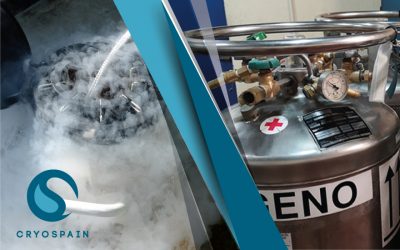
Cryogenic dewar: tips for a safe, optimized storage
A cryogenic dewar is both one of the main breakthrough inventions for the development of cryogenics in the 19th century and a crucial element today for storing certain common gases. We analyse what a dewar tank exactly is and what precautions must be taken in order to...
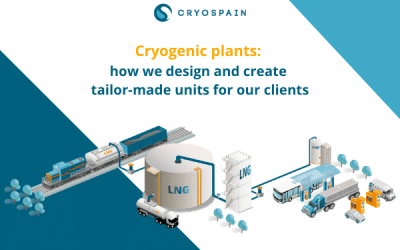
Cryogenic plants: how we design and create tailor-made units for our clients
Cryogenic plants are a key element in the industrial gas industry, as they provide the adequate infrastructure for cryogenic gas processing and storage. In light of their importance, at Cryospain we want to share some keys about them, including what is a cryogenic...
Cryogenic storage tank projects: two spectacular roof lifts
Here at Cryospain, our international projects keep on coming! We currently have several cryogenic tank projects in the process of manufacture and installation. Today it is our pleasure to present two of our latest cryogenic storage tank projects, which are currently...
Gas Cylinder Pasteurisation System – New Product!
At Cryospain, we're always looking for new ways to offer our clients quality and security. We're happy to announce a totally new product to take even better care of your gas cylinders We're proud to announce that we now boast an industrial gas cylinder pasteurisation...
Cooling down service for cryogenic tanks
Cryospain is proud to announce another successful project. We carried out the cooling down of a 4,500m3 liquid gas cryogenic tank located in Ras Laffan Industrial City, Qatar. Our engineers designed this flat bottom tank, manufactured it in our own facilities and...
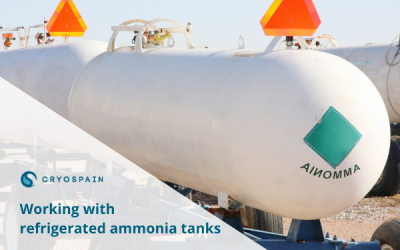
Things you need to keep in mind when working with refrigerated ammonia tanks
Refrigerated ammonia tanks are a key element to many industries working with this increasingly prominent gas. Around a hundred ammonia plants are expected to be built in the next decade around the globe, and experts forecast the global ammonia production to grow...
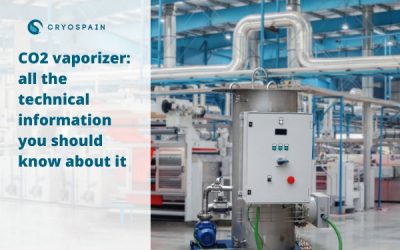
CO2 vaporizer: all the technical information you should know about it
The rise of the use in CO2 across a wide array of industries has given way to the widespread use of the CO2 vaporizer. A convenient way for CO2 transportation, and storage, as well as applying CO2 gas, we analyze the basic technical information around the CO2...

The growth of the cryogenic market: how has the COVID-19 affected the sector?
The cryogenic market comprises a wide array of companies, all in the business of operating in extremely low temperatures: from businesses manufacturing the necessary equipment, to those helping transporting and storing substances at cryogenic temperatures. The growing...
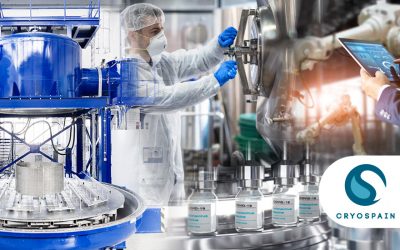
The value of technical gases for industrial production
Technical gases are an essential part of a wide range of industries, from the health sector to the food or construction industries, to name just a few. As these industries advance, particularly in the developing economies of Asia Pacific, the applications for...
We keep you informed
Get to know all the latest news from Cryospain